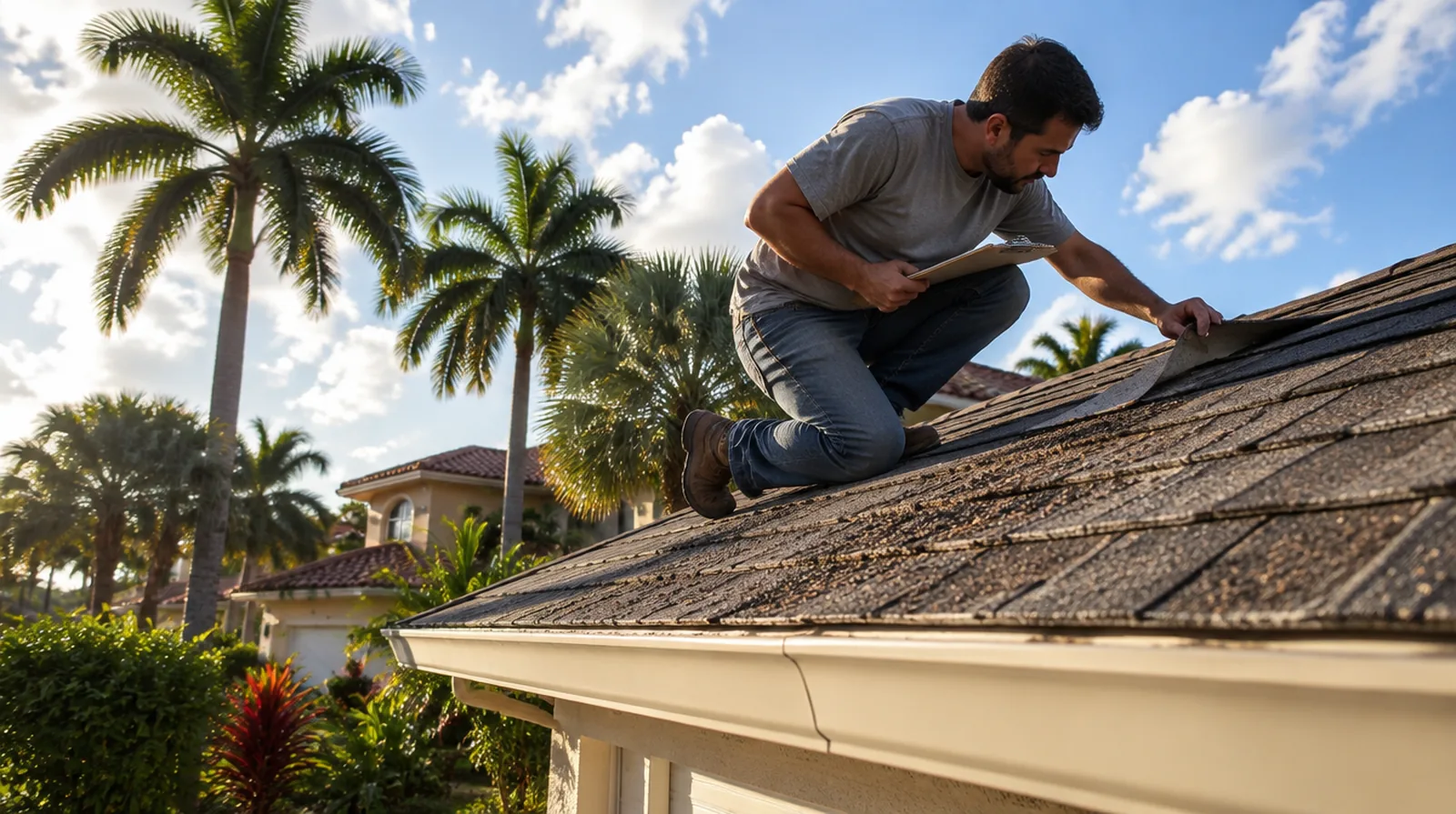
What a Coconut Creek roof inspection includes
On the roof, we check the field of tiles or shingles for cracks, breaks, slippage, granule loss and wind damage. We look at ridge and hip caps, valleys, flashing at walls and chimneys, roof-to-wall transitions over porches, pipe collars and roof vents. On tile roofs we lift selected tiles to see the condition of the underlayment, since that layer does most of the waterproofing. Flat and low-slope sections are checked for ponding, cracks and seam failure.
In the attic we look at the underside of the deck for stains, rot and daylight, check insulation for moisture and note how well the attic is ventilated.
Our roof inspection process
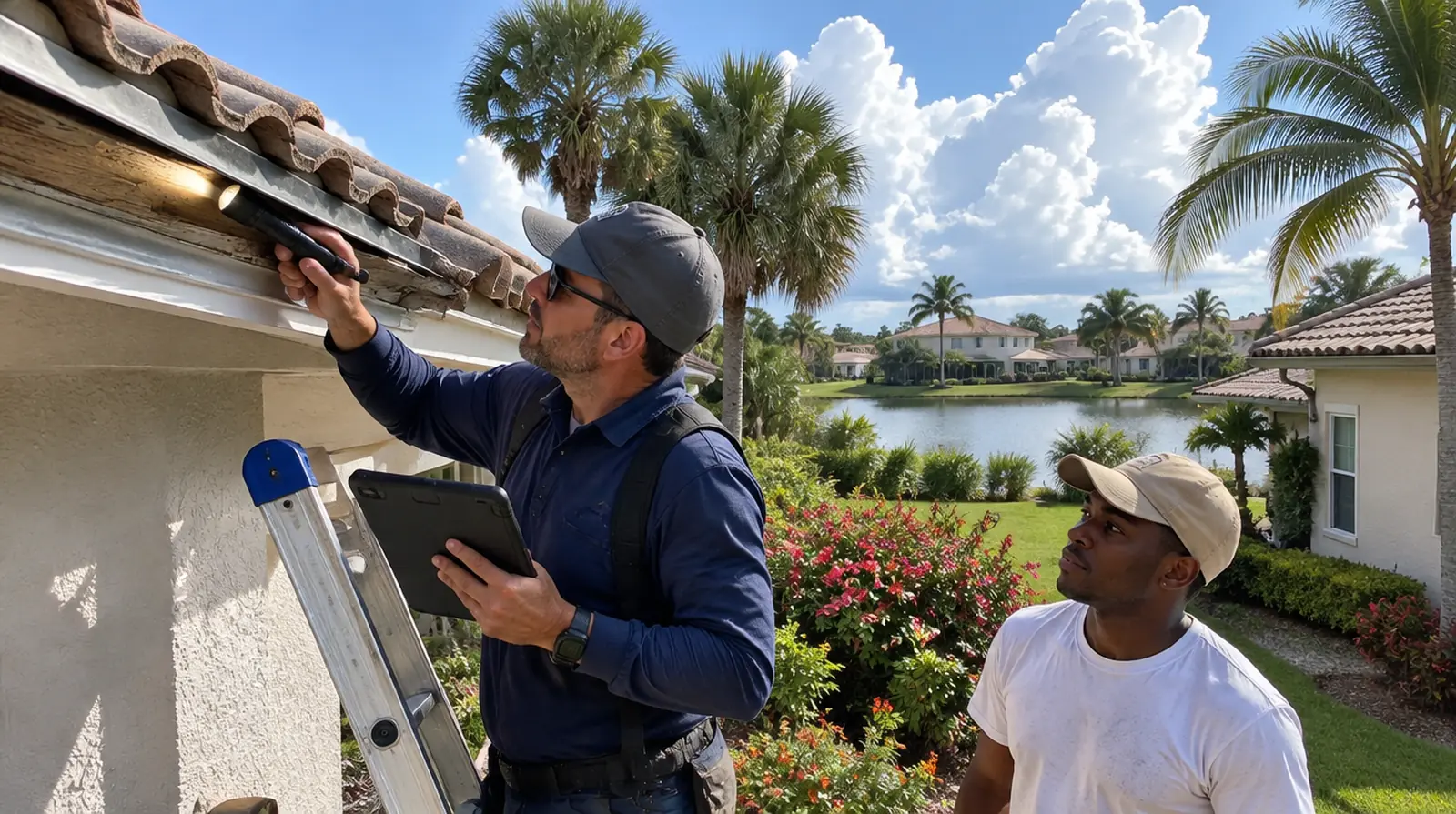
Purpose first. We ask why you want the inspection: a sale, a purchase, insurance, a storm or a stain. That shapes what we focus on and how we document it.
Roof walk. We move carefully on tile, stepping on the strongest points, and photograph each slope and detail. When a roof cannot be walked safely, we use ladders and close-up photos.
Attic. We trace stains, look for rot and check ventilation.
Report. You get photos and plain notes on what is in good shape, what needs repair and what to plan for. Repairs are priced separately, with no pressure.
When to schedule an inspection
- Before buying or selling a home.
- Ahead of an insurance renewal when the roof is older.
- After a hurricane or tropical storm passes nearby.
- When you see broken tiles or missing shingles.
- When a ceiling stain appears after heavy rain.
What we look for on local roofs
On tile roofs, the underlayment is the main concern: it can be brittle and torn while the tile above still looks fine. We also look for cracked tiles from foot traffic, loose ridge caps and slipped tiles after storms. On shingle roofs, sun damage, lifted edges and algae streaks are common. Flat sections over entries and screen rooms often show ponding and open seams at the joint with the main roof.
What affects inspection scope
- Roof material. Tile inspections take more time because of care needed underfoot.
- Size and layout. Large or multi-level roofs take longer.
- Purpose. Real estate and insurance documentation may need more detail.
- Attic access. Tight or blocked attics take longer.
Why an inspection beats a guess from the ground
A tile roof can look perfect from the street while the underlayment beneath it is failing. Stains on ceilings can come from air conditioning lines or plumbing rather than the roof. A close inspection separates those causes, so you put money where it is actually needed and have a record for insurance or a sale.
Inspections and Florida insurance
Insurance companies in Florida often ask about roof age and condition, and some request photos or reports. Having a recent, documented inspection helps you answer those questions and plan for repairs or replacement before they become a coverage issue.
Checking the roof before hurricane season
Late spring is a smart time for a roof check here. Loose ridge tiles, a lifted row of shingles or a torn flashing seam are much easier to fix in May than after a storm has torn them open. A pre-season inspection also gives you dated photos of the roof's condition, which can be useful if you ever need to file a storm claim later in the year.
Inspections for condos and townhomes
In many Coconut Creek communities, the association maintains the roofs, but owners still want to know the condition above their unit. We can inspect and document a specific section when the association permits it, giving you information to bring to the board.
Roof inspection FAQs
How long does it take?
About an hour for most homes; tile and large roofs may take longer.
Do you inspect tile roofs?
Yes, including lifting tiles to check underlayment.
Will I get photos?
Yes, every inspection includes photos and notes.
How do I schedule?
Call (954) 994-2032 to book.
Want a clear read on the roof?
Call (954) 994-2032 to schedule a roof inspection in Coconut Creek.