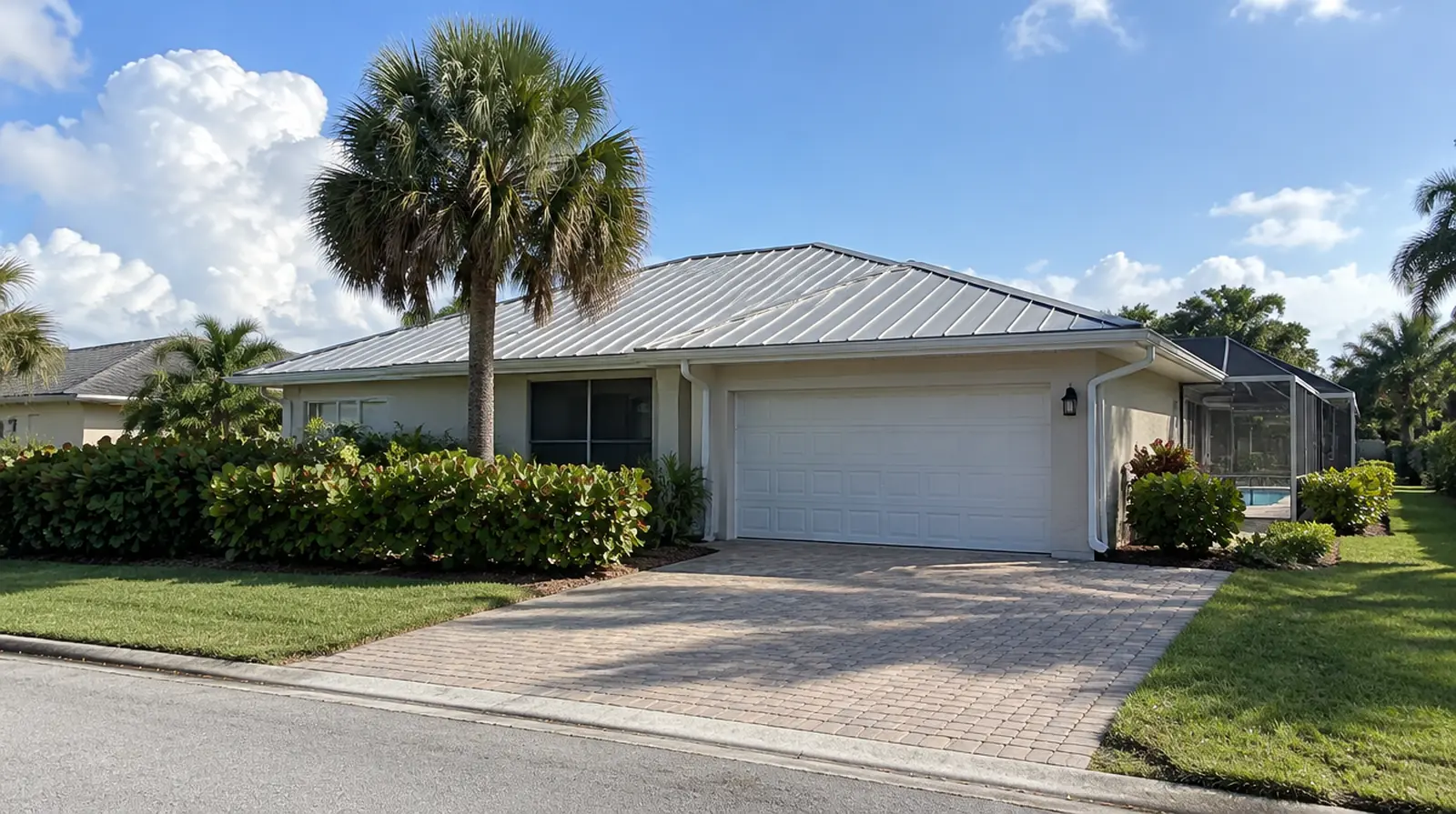
What makes a metal roof "HVHZ-ready"
In Broward and Miami-Dade, the building department does not take a manufacturer's word for wind ratings. Every roof system needs either a Miami-Dade Notice of Acceptance or a Florida Product Approval that is specifically approved for use inside the HVHZ. That document lists the panel gauge, the clip or screw type, the spacing, the underlayment and the edge metal that were tested together. The roofing permit package includes the approval pages with the exact system circled, plus uplift calculations for your roof's height, slope and zones.
For a homeowner, the practical point is simple. A panel that is sold for barns in Georgia may look the same as one approved for South Florida, but it cannot go on your house. We only quote systems that are approved for the zone, and we install them to the approval's fastening pattern, which is usually far tighter at the corners and perimeter than in the middle of the roof.
Standing seam or exposed fastener?
Standing seam panels are held down with concealed clips, and the raised seams lock over them. There are no screw heads facing the sun, and the clips let the panel slide slightly as it heats up on a July afternoon and cools in an evening storm. This is the profile most Coconut Creek owners pick for a house, and it is the one that tends to satisfy community architectural boards.
Through-fastened panels (often called 5V or ribbed) are screwed straight through the face into the deck. They cost less and suit detached workshops, carports and some older ranch homes. The screws and their washers are the maintenance item, so we talk honestly about the inspection schedule that comes with them.
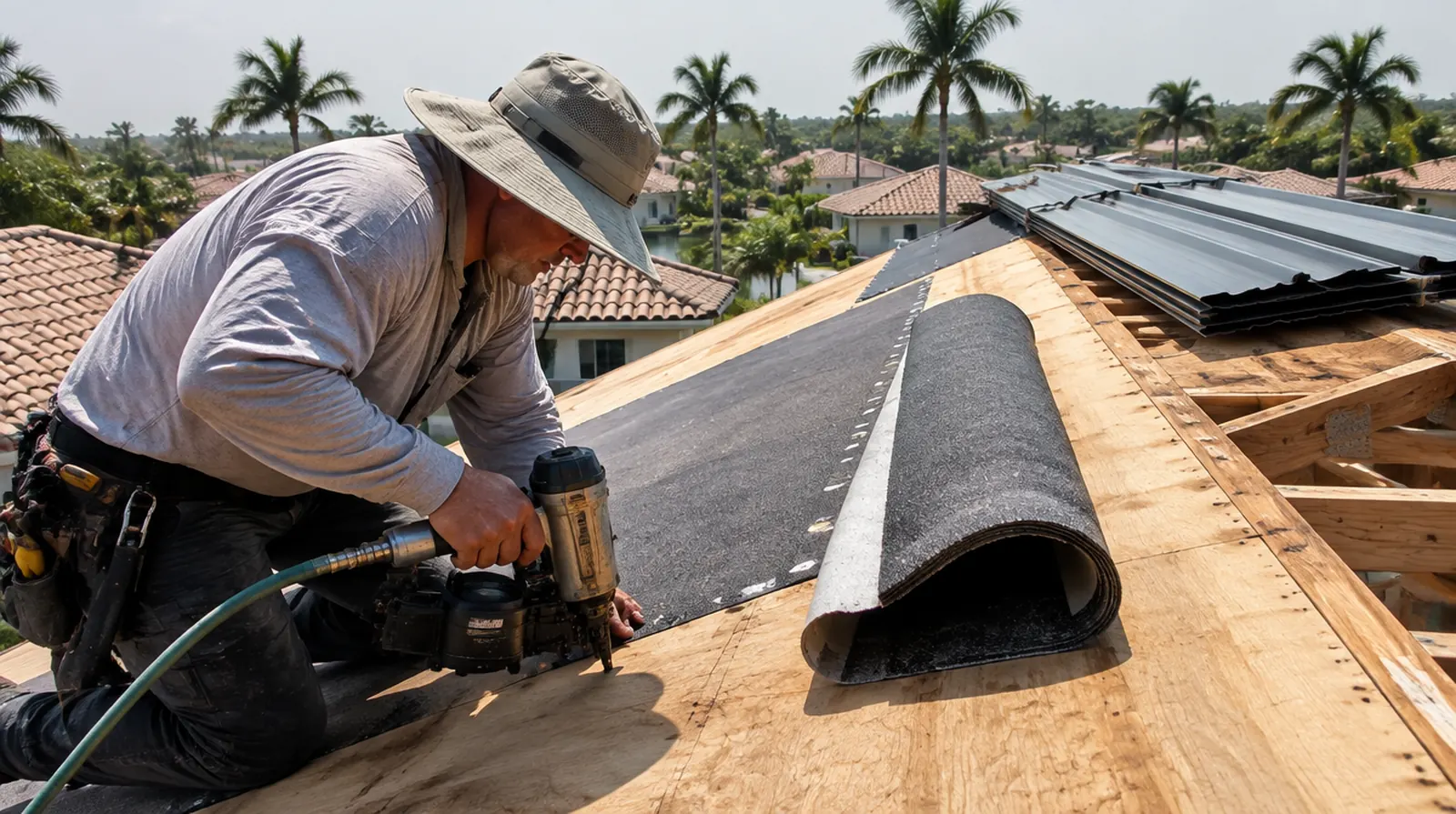
The parts of the job you never see
A re-roof in Broward is inspected in stages, and most of the real work happens before a single panel arrives.
- Tear-off to the deck. Old shingles or tile come off completely. Tile roofs carry a lot of mortar and underlayment that has to go too.
- Deck renailing. Plywood sheathing is renailed to current code spacing with ring-shank nails, and rotted sheets are replaced. A signed affidavit for this step has to be on site before the in-progress inspection.
- Sealed underlayment. A secondary water barrier goes down so that if panels are ever damaged in a storm, rain does not pour straight into the attic.
- Roof-to-wall review. On many single-family homes, the permit process also covers how the roof framing is tied to the walls. We explain what applies to your house before we start.
- Panels, trim and penetrations. Edge metal, valleys, plumbing vents and any rooftop equipment are flashed and fastened to the approval details.
HOA and condo approvals in Coconut Creek
A large share of homes in the city sit inside a homeowners or condominium association, from single-family neighborhoods off Lyons Road and Hillsboro Boulevard to the big villa and condo communities on the north end of town. Broward permits for those properties require a letter from the association approving the scope of work. Many boards publish an approved color list, and some limit which roof materials can replace tile. We help you put together the submittal with product sheets and color chips so the board can say yes the first time.
Living with metal in South Florida weather
The daily summer rhythm here is heat, humidity and an afternoon thunderstorm rolling in off the Everglades side. Metal handles that pattern well. It does not soak up water, it does not grow the black streaks that shingles do, and a light, reflective finish keeps far less heat in the attic than dark asphalt. Rain is louder on metal over an open frame, but over a solid plywood deck with underlayment and an insulated attic most people hardly notice.
Coconut Creek is only a few miles inland from the beaches at Deerfield and Pompano, so salt air reaches the city on east winds even if it is milder than right on the coast. We recommend painted coatings rated for coastal exposure, and we keep dissimilar metals (like copper and steel) apart so they do not corrode each other.
Is metal worth it for your house?
Metal costs more than shingles and is often in the same range as a quality tile roof. The value comes from lifespan, lower attic heat and the way a well-fastened system holds up through hurricane season. Some insurers also give credit for wind-rated roof coverings, so ask your agent before you decide. If you plan to move in a few years, we will tell you plainly that a shingle roof may make more sense. You can also compare our roof replacement options side by side.
Common questions
How long does a metal roof take to install?
Permitting usually takes longer than the work itself. Once approved, most single-family homes take one to two weeks on the roof, depending on tear-off, deck repairs and inspection scheduling.
Can metal go over my existing tile?
No. In the HVHZ the old roof comes off so the deck can be inspected, renailed and sealed.
Will my roof get hot?
The panel surface gets warm in direct sun, but reflective colors send much of that heat back out. The attic below typically runs cooler than under dark shingles.
Pricing a metal roof in Coconut Creek?
Call (954) 994-2032 and we will measure the roof, check your HOA rules and walk you through panel profiles and colors before you commit.